Portable AV equipment has changed the way buyers think about power connections. A small production rig can now include powered speakers, LED video panels, livestream switchers, wireless receivers, lighting controllers, stage monitors, compact mixers, media players, charging stations, and backup power equipment. The setup may be built in a church on Sunday, packed into cases on Monday, and used at a school, hotel, showroom, or outdoor event later in the week.
That kind of movement creates a practical problem. Power cables are no longer hidden behind fixed racks for years. They are plugged in, pulled out, coiled, labeled, borrowed, stepped around, and sometimes connected in poor lighting by people who are trying to finish the job quickly. In this environment, a simple loose power inlet can become a weak point. A locking power connector gives the system a more secure physical connection, which is why buyers are paying closer attention to this part in 2026.
This is not only a stage-audio issue. Locking AC connectors are appearing in powered speaker systems, LED display cabinets, lighting fixtures, control boxes, portable distribution panels, test equipment, and professional electronics that need a more dependable power interface than a casual plug fit. For OEMs and sourcing teams, the connector choice now affects installation speed, user confidence, maintenance, and product reputation.
Portable systems expose weak power connections
In a fixed installation, a power connector may be touched only during setup or service. In portable AV, the same connection may be handled every day. A rental crew may plug in dozens of devices before a show. A church volunteer may reconnect cables after a room is rearranged. A school technician may set up audio equipment in a gym and then move it to an auditorium. A small event company may build the same system in different venues with different cable paths each time.
Every move creates a chance for a cable to be pulled, twisted, or partly disconnected. That risk is especially visible near powered speakers, floor monitors, LED screens, DJ booths, lighting truss bases, and control racks where people walk close to the equipment. A connector that locks into position helps reduce accidental unplugging and gives the user a clearer feeling that the device is ready for operation.
Customers may not describe this in engineering language. They say the power cable feels secure. They say the plug does not fall out. They say the equipment is easier to trust at an event. Those small comments matter because professional equipment is judged under pressure. If a product loses power during a sound check, rehearsal, livestream, or presentation, the buyer remembers.
Event production is becoming more modular
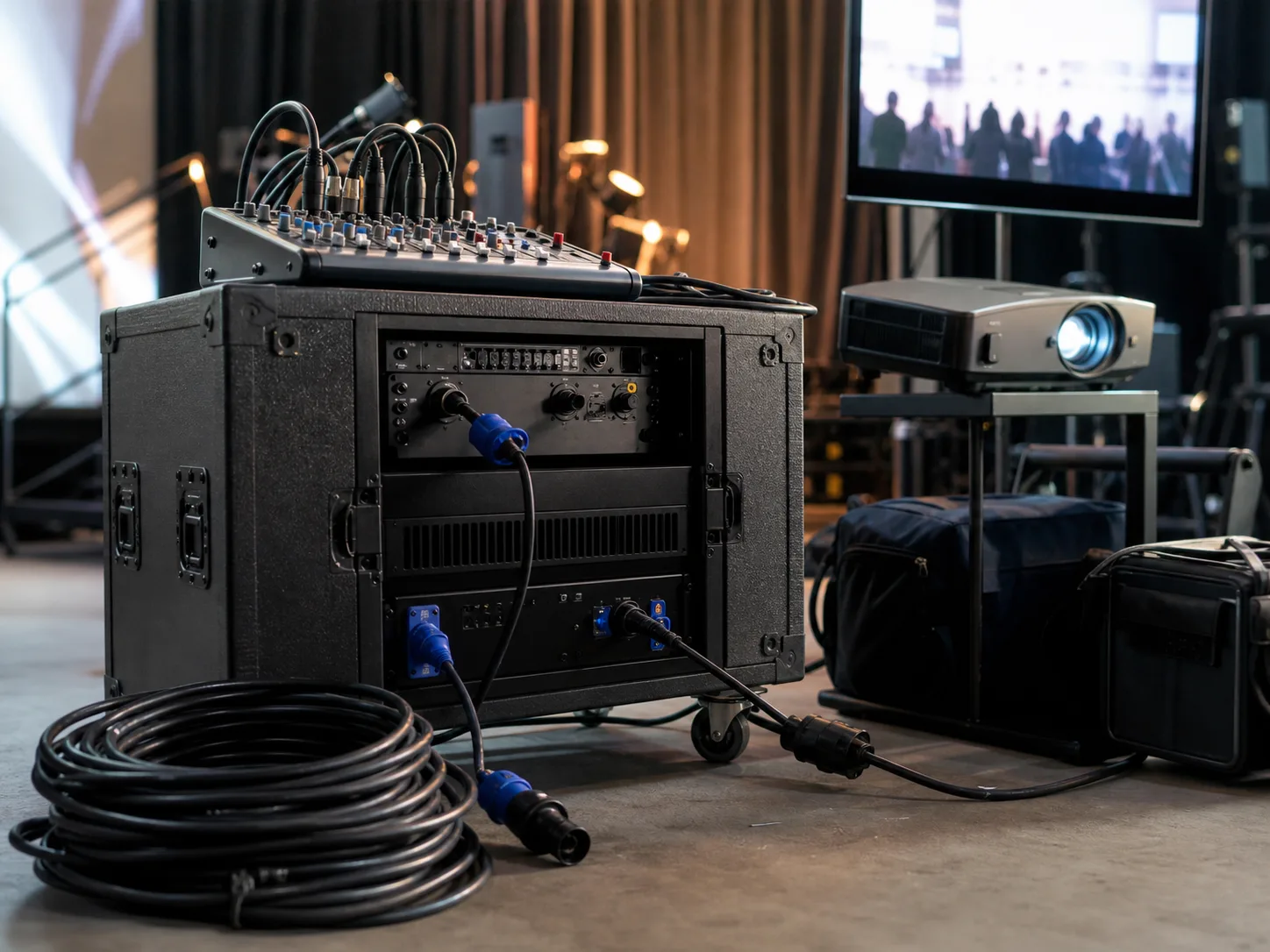
The live event and Pro AV market keeps moving toward modular systems. Instead of one fixed rack feeding one fixed room, many buyers now build flexible kits that can be scaled up or down. A compact setup may use two speakers and a small mixer. A larger version may add subwoofers, wireless microphones, LED lighting, video playback, camera switching, and stage power distribution. The equipment changes by event, but the expectation is the same: it must connect quickly and work without drama.
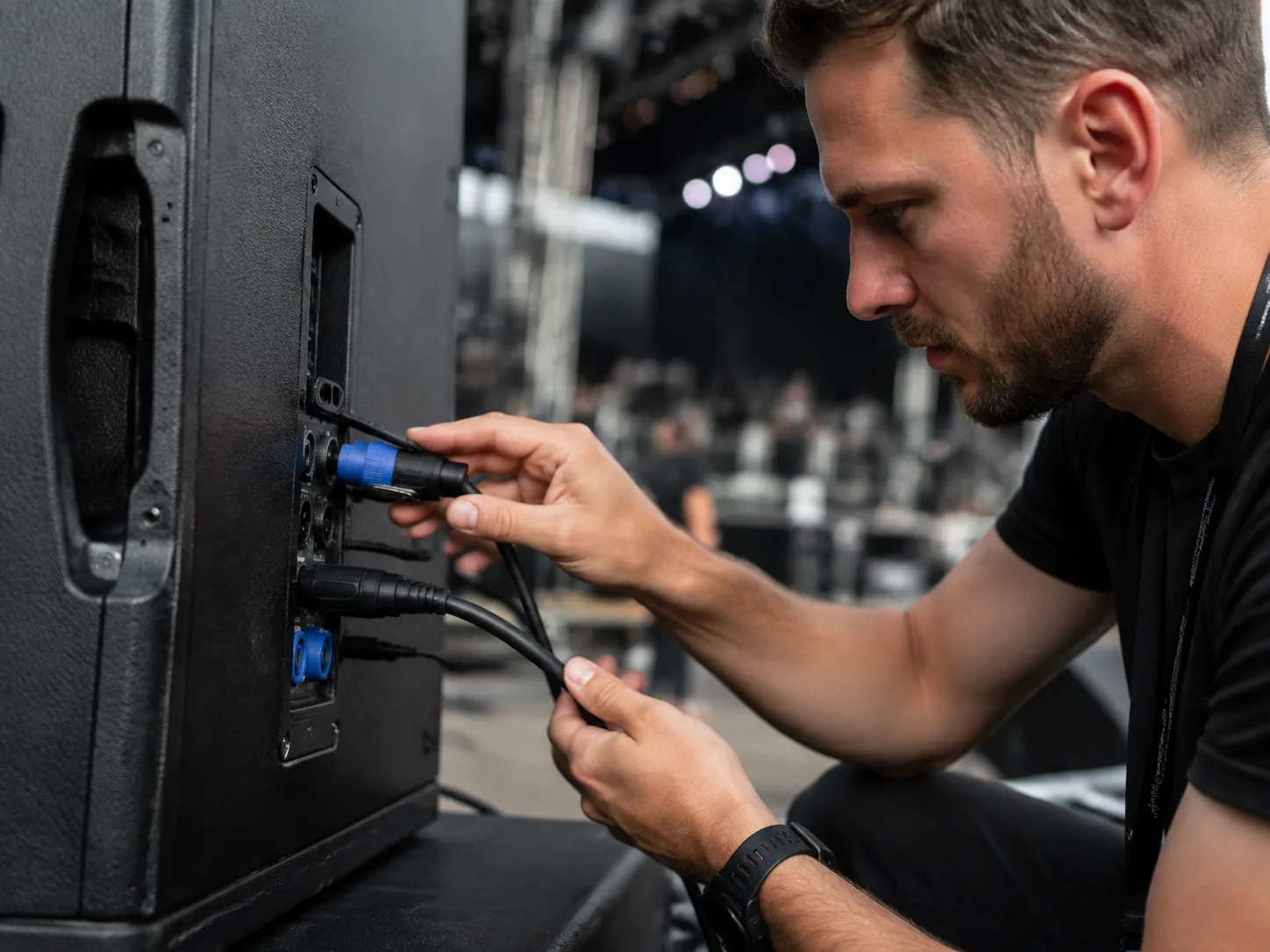
Locking power connectors fit this workflow because they make the connection point more deliberate. The user aligns the connector, inserts it, locks it, and can visually or physically confirm that the cable is seated. This is useful in crowded panels where signal connectors, speaker connectors, USB ports, network ports, and power inlets sit close together.
For manufacturers, this trend changes the value of the connector. The power inlet is no longer just a back-panel item. It becomes part of the product's field usability. A clear, rugged, locking input can make powered equipment feel more professional before the customer even turns it on.
Powered speakers and LED equipment make reliability visible
Powered speakers are a good example. A passive speaker system puts the amplifier somewhere else, but an active speaker needs power at the box. That means every speaker on a stand, stage, or truss area has a power cable that may be moved, extended, or routed around people. If the connector is loose, the failure is immediate and obvious: no sound.
LED display and lighting equipment create a similar concern. A single loose power point can darken a fixture, panel, or controller at the wrong moment. Even when the electrical design behind the product is solid, the customer experiences the connector as part of reliability. If the cable lock feels positive and the panel inlet is well mounted, the product feels built for real work.
This is one reason buyers often ask for panel mount power sockets and cable connectors that match the physical life of the equipment. They are not only checking current rating. They are asking whether the connector can tolerate repeated setup, road cases, vibration, cramped panels, and fast maintenance.
Users want clearer power input and output design
Another customer concern is confusion. In professional equipment, power input, power output, signal input, signal output, speaker output, DMX, Ethernet, and control ports can all share the same panel. If the design is not clear, users may hesitate or connect the wrong cable path during setup.
Locking power connector systems help when the inlet and outlet are visually distinct, mechanically keyed, and properly labeled. A good panel layout reduces mistakes for rental crews, volunteers, venue staff, and installers. This is especially important when a device has both power input and power through connections for daisy-chaining compatible equipment.
The connector itself cannot replace good electrical design, correct ratings, safe wiring, and compliance work. But it can support a cleaner user experience. When power connections are obvious, secure, and repeatable, the setup process becomes less stressful.
What OEM buyers should check before choosing a locking power connector
The first step is still electrical suitability. Buyers should confirm rated voltage, rated current, contact design, wiring method, cable size, temperature range, and whether the connector is intended for power input, power output, or a specific equipment-side configuration. A locking shape is useful only when the full connector system matches the product's actual power requirements.
The second step is mechanical fit. Panel thickness, cutout dimensions, screw position, rear clearance, strain relief, cable bend space, and assembly process all affect the finished product. A connector that looks right in a drawing may be awkward if it crowds the PCB, blocks another terminal, or leaves no room for a technician's hand during wiring.
The third step is the use environment. Equipment used in touring, events, showrooms, schools, workshops, or outdoor temporary setups may need stronger mounting than desktop electronics. If the device will be moved often, the connector should be considered together with the enclosure, cable routing, and service procedure.
Why this topic brings useful search traffic
Many buyers do not begin with a part number. They begin with a problem. They search for locking power connector, powerCON connector, panel mount AC power socket, speaker power connector, stage power connector, or power connector for LED equipment. Behind those searches is usually a real project: a powered speaker, a lighting fixture, a control box, a distribution panel, or another product that needs a secure power interface.
A useful industry article should meet that buyer before they ask for a quotation. It should explain why the connector matters, what problems it solves, and what details need to be checked. That kind of content attracts visitors who are still comparing options, and it helps them understand the product category without feeling pushed into a sale too early.
Outlook for 2026
Portable production equipment will keep getting lighter, smarter, and more modular, but the power connection still has to be physical. The more often a product is moved, the more important that connection becomes. Locking power connectors are valuable because they answer a very ordinary customer worry: will the cable stay connected when the equipment is actually being used?
For OEMs and equipment builders, the practical move is to choose the power connector early, not after the enclosure is almost finished. Confirm the rating, locking direction, panel layout, cable connector match, labeling, and assembly method before tooling. That helps prevent late design changes and gives the finished product a stronger user experience.
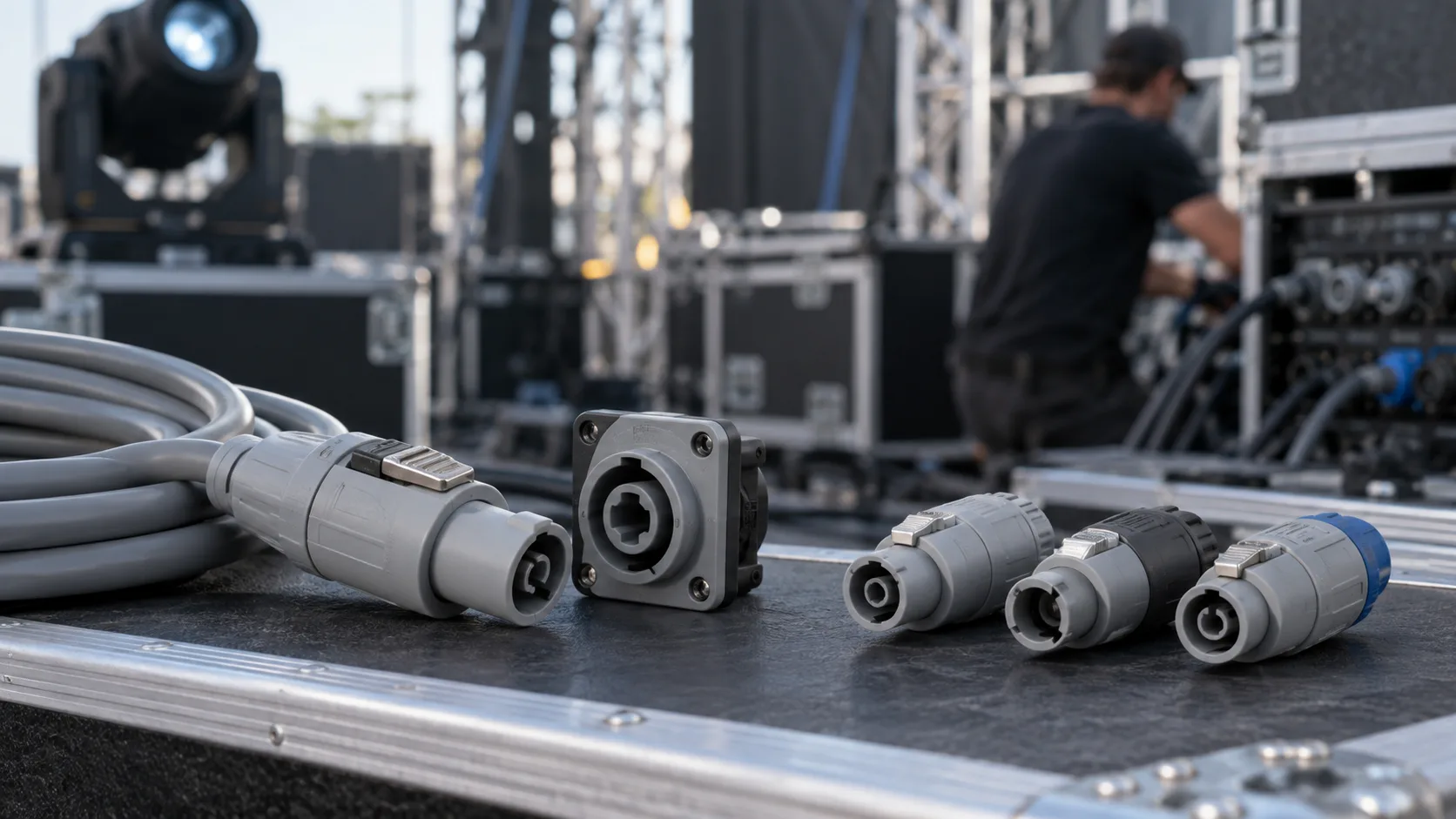
CENYU's PowerCON connector range includes panel mount sockets and cable connectors for professional audio, stage equipment, LED systems, power distribution products, and other electrical equipment that needs a secure locking AC power connection.