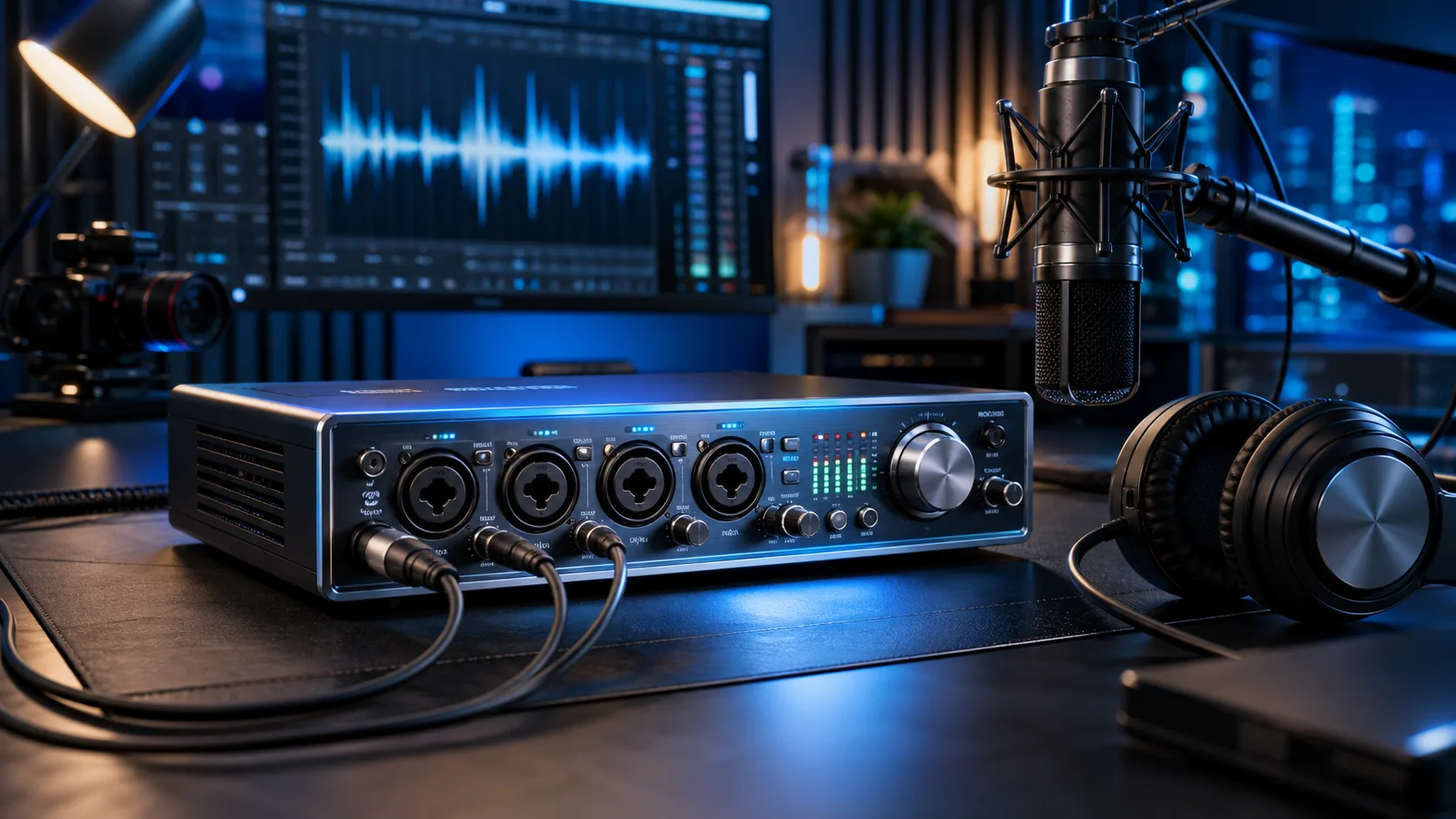
The 6.35mm phone jack is not the newest connector in professional audio, and that is exactly why it is back in the conversation for equipment buyers in 2026. As live sound, creator gear, rehearsal rooms, worship systems, guitar equipment, and small-format production devices keep moving through another replacement cycle, buyers are paying closer attention to the parts that are handled every day. The quarter-inch socket is one of them.
Recent market coverage gives the background. AVIXA's industry outlook, reported by AVNetwork, points to global Pro AV revenue moving from $332 billion in 2025 toward $402 billion by 2030. At the same time, the 2026 NAMM cycle showed another wave of compact interfaces, modelers, pedals, mixers, practice amps, and creator-focused tools reaching the market quickly. MusicRadar's NAMM 2026 coverage highlighted how much new music-making hardware is still built around tactile, physical workflows, even when the product story is digital, USB, AI, or cloud-connected.
That mix matters for connector suppliers. The front panel may now include a touchscreen, USB-C, Bluetooth, network control, or app-based presets, but musicians and technicians still expect a familiar 1/4-inch input where the instrument, footswitch, headphone feed, line output, or auxiliary signal needs to connect in seconds. The result is not a dramatic reinvention of the 6.35mm phone jack. It is a quieter shift: buyers are asking for cleaner mechanical choices, stronger mounting, and a better match between socket type and real field use.
Why a mature connector is getting new scrutiny
Professional audio projects are being planned under tighter cost pressure than the post-pandemic boom years. Tariffs, component pricing, freight, and project delays remain part of the discussion across the AV channel. When a mixer, amplifier, active speaker, keyboard, or pedalboard controller is expected to stay in service longer, the exposed connector becomes a maintenance issue, not just a bill-of-materials line.
For rental companies, repair shops, integrators, and OEM buyers, the concern is simple: a low-cost jack can become an expensive failure if it creates intermittent signal, poor contact after repeated insertion, cracked solder joints, or a loose panel fit. A socket that works fine on a bench can behave differently after months of stage use, cable strain, dust, vibration, and fast changeovers. That is why procurement teams are looking beyond the words mono, stereo, PCB, or panel mount. They want to know how the connector is held, how the contacts recover after use, and whether the selected structure fits the enclosure.
TS and TRS selection is becoming more deliberate
One visible change in 2026 equipment planning is that designers are less willing to treat every 6.35mm jack as interchangeable. A TS jack still makes sense for many unbalanced instrument inputs, guitar pedals, basic audio outputs, and footswitch-style circuits. A TRS jack is often preferred for balanced line connections, stereo headphone outputs, insert points, expression pedals, and control applications. Switched jack designs are also used when equipment needs signal routing, detection, or automatic bypass behavior after a plug is inserted.
The difference is not academic. If a product line includes practice amps, effects units, powered speakers, studio controllers, and portable mixers, the same external connector size may hide very different electrical requirements. A careless substitution can create support problems later: wrong channel behavior, noisy switching, weak plug retention, or confusion during service. For component buyers, the safer approach is to map each jack position by function first, then choose the socket style.
Mounting style is now part of the reliability discussion
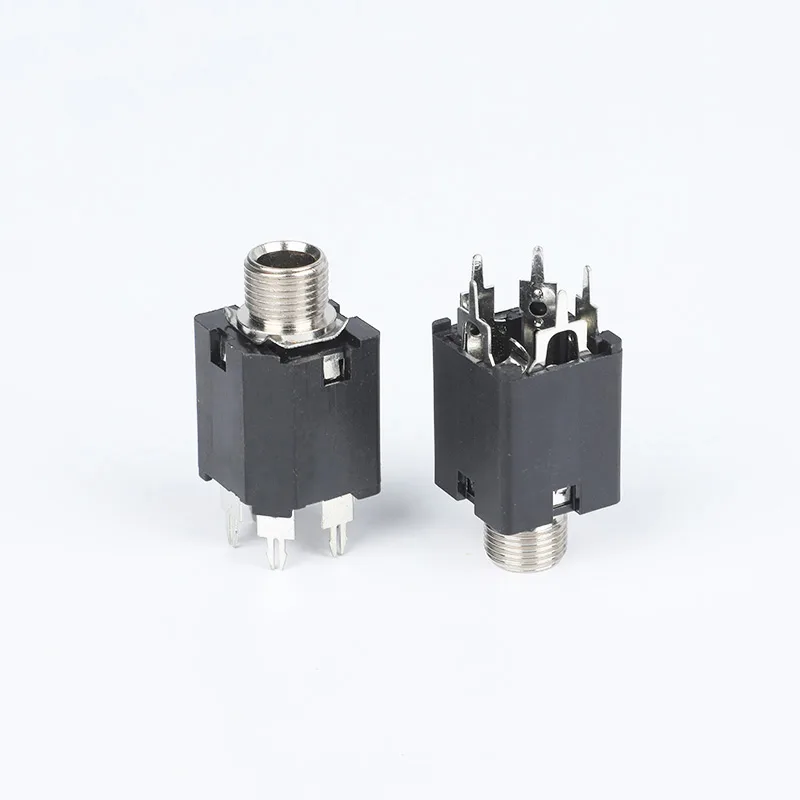
Compact products keep pushing toward PCB-mounted jacks because they save assembly time and help keep the layout clean. That is useful for pedals, audio interfaces, small mixers, headphone amps, and desktop control devices. But PCB mounting also means the board may absorb some of the force from cable movement unless the enclosure design supports the jack properly. For equipment that will be moved often, a reinforced PCB layout, stable alignment, and suitable solder footprint are not optional details.
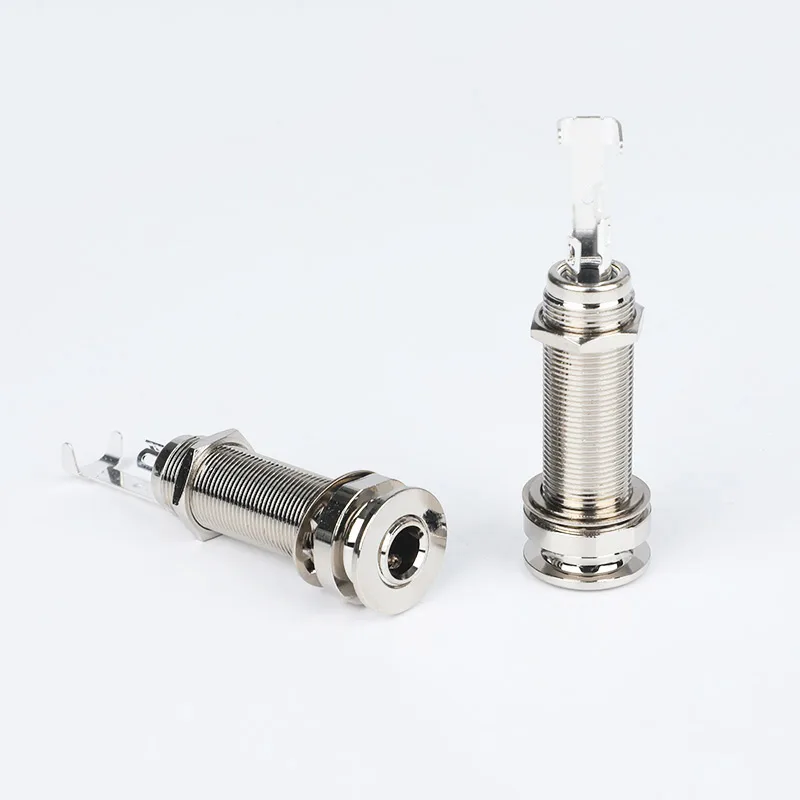
Panel-mount and chassis-style 6.35mm sockets continue to matter in amplifiers, rack equipment, stage boxes, powered speakers, and heavier-duty audio gear. These applications benefit from a connector that can be secured to the housing and serviced more easily when the front or rear panel is opened. The tradeoff is that panel wiring, nut clearance, bushing length, and assembly labor must be planned earlier in the design process.
This is where many OEMs are becoming more practical. Instead of choosing the smallest or cheapest jack first, they are asking whether the unit will sit on a desk, travel in a case, live in a rack, or be plugged and unplugged by different users all day. The answer changes the connector choice.
Repairability is influencing connector demand
Another reason the 6.35mm phone jack remains important is repairability. USB, networked audio, wireless links, and digital control will keep growing, but they do not remove the need for physical analog access. A quarter-inch jack is easy for users to understand and easy for service teams to test. If a unit has a no-signal complaint, technicians can often diagnose the jack, cable, switch contact, solder joint, or adjacent circuit quickly.
That service advantage is valuable in a cautious buying environment. Schools, venues, churches, rental houses, rehearsal spaces, and small studios often prefer equipment that can be repaired locally instead of replaced as a sealed product. For these customers, the connector is part of the ownership cost. A better socket choice can reduce returns, avoid downtime, and keep older equipment useful for another season.
What buyers are asking connector suppliers
The most common questions around 6.35mm phone jack sourcing are becoming more specific. Buyers want stable contact performance after repeated use, clear TS or TRS configuration, reliable switched options when required, and mounting choices that match the product housing. They also ask for consistent dimensions across batches, practical terminal layouts, and enough product variation to support both PCB and panel designs without changing supplier families too often.
For a connector manufacturer, that means the opportunity is not only in offering a long list of models. The useful value is helping customers choose the right model for the device category: guitar and bass equipment, audio mixers, headphone outputs, line-level equipment, instrument amplifiers, studio tools, and general audio control panels. The 6.35mm jack may look standard from the outside, but the wrong internal structure can still create a weak point.
Outlook for 2026
The quarter-inch connector is not disappearing from professional audio. If anything, the newest wave of compact music and AV equipment is proving that mature analog I/O still has a place beside digital features. The market is not asking the 6.35mm phone jack to become fashionable. It is asking it to be dependable, easy to source, mechanically appropriate, and repair-friendly.
For OEMs and equipment builders reviewing 2026 product plans, the practical move is to treat the 6.35mm jack as a design decision instead of an afterthought. Choosing the right TS, TRS, switched, PCB-mount, or panel-mount socket early can help improve the user experience and reduce avoidable service problems later.
CENYU's 6.35mm Phone Jack Series covers multiple audio jack socket structures for professional audio equipment, musical instruments, amplifiers, mixers, and related electronic devices.