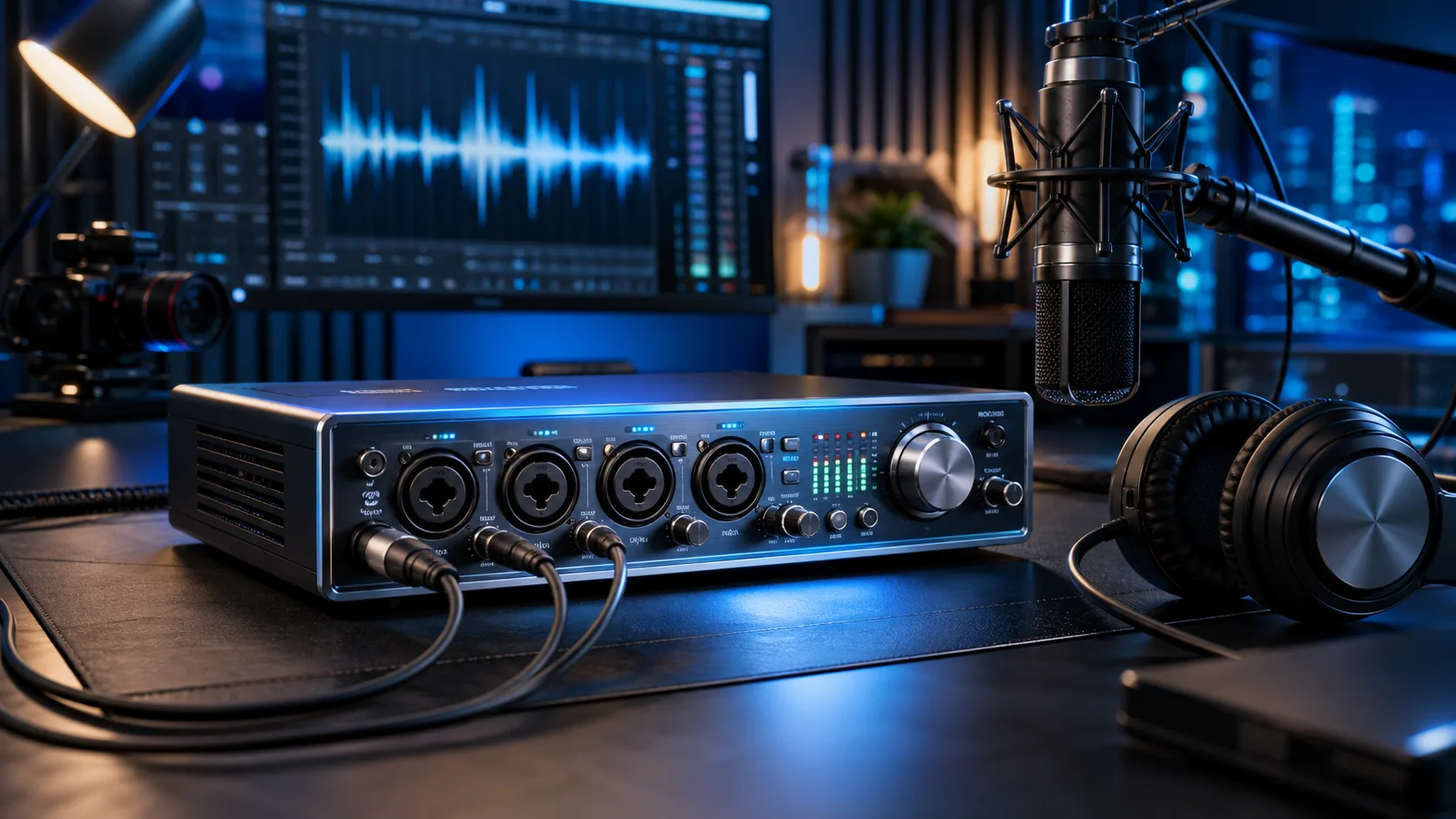
The professional audio market is not only being shaped by large touring systems and installed AV projects. In 2026, a lot of the practical connector demand is coming from smaller boxes: desktop audio interfaces, creator mixers, podcast consoles, compact video switchers, rehearsal gear, powered speakers, and portable production stations. These products are not always expensive, but they are handled constantly, and their front-panel inputs are expected to accept whatever the user brings to the session.
That is where the XLR combo input keeps earning space. A single panel opening can support an XLR microphone connection and a 6.35mm plug for line or instrument input, depending on the circuit behind it. For OEM buyers, this is not just a convenient shape. It is a way to make one product feel flexible without turning the panel into a crowded row of separate sockets.
The wider market background is still positive enough to make this worth watching. AVIXA's 2025 Industry Outlook and Trends Analysis, reported by AVNetwork, pointed to global Pro AV revenue moving from $332 billion in 2025 toward $402 billion by 2030. Meanwhile, NAMM 2026 coverage showed another busy cycle of compact music-making hardware. Even when the headline is software, streaming, DSP, or USB-C, the user still needs a physical input that feels normal under the hand.
Why combo inputs fit the current product cycle
Small audio products are being asked to serve more jobs than before. A creator may use the same desk unit for a dynamic microphone, a keyboard, a guitar processor, a field recorder, a caller feed, or a small mixer output. A church or school may use one compact console for livestreaming during the week and live voice reinforcement on the weekend. A rental kit may move between podcast rooms, demo spaces, training rooms, and event booths.
In those cases, a fixed XLR-only input can feel too narrow, while a separate XLR plus 6.35mm layout can take up panel space that the enclosure does not have. The combo jack gives designers a middle path. It keeps the familiar XLR face for microphones, but it also supports the 1/4-inch plug family that musicians, technicians, and installers still use every day.
This is especially relevant for compact devices where the front or rear panel is already fighting for space with headphone outputs, USB-C ports, control knobs, small displays, SD card slots, network ports, and power inputs. A clean I/O layout matters because users do not read the panel slowly in real life. They plug in, check signal, and move on.
Creator hardware is making audio I/O more visible
Streaming and content creation have changed how audio hardware is judged. In older studio workflows, the person using the gear often had some technical background. In newer creator setups, the product may be used by musicians, teachers, presenters, gamers, churches, small businesses, or video teams that do not want a wiring lesson before every session.
That shifts pressure toward connectors that are easy to recognize. XLR still signals microphone input. A 6.35mm jack still signals instrument, line, or headphone-style audio depending on the label. A combo input lets both expectations live in the same position. For the user, it reduces the feeling that the device is missing the right socket. For the manufacturer, it can reduce the number of enclosure variations needed across related models.
Recent creator-audio launches show the same direction in a broader sense. Elgato's Wave XLR Pro, for example, is marketed around dual XLR audio, onboard processing, dual USB-C, and multi-mix workflows. RODE's RODECaster Video S is positioned as a compact video and audio production console. The details differ by brand, but the pattern is clear: more compact devices are treating serious audio inputs as a selling point, not a hidden engineering detail.
What this means for connector buyers
For component buyers, the renewed attention on compact audio I/O changes the conversation. The question is no longer only whether a combo socket fits the schematic. It also has to survive the way the product will be used. Desk devices may see frequent cable changes. Portable gear may sit in a case with cables packed around it. Stage boxes and small mixers may get plugged in by different people under poor lighting. Educational and worship equipment may be handled by volunteers who are not gentle with connectors.
That makes the mechanical side more important. The socket must sit cleanly in the panel, hold the plug with a consistent feel, align with the PCB or wiring layout, and avoid becoming the weak point when cable strain appears. A connector that works during factory testing can still become a service problem if the housing support, solder footprint, or panel fit is not matched to real use.
Buyers are also paying more attention to model consistency. If an OEM is building a family of compact mixers, audio interfaces, powered speakers, or production controllers, it helps when the supplier can support related connector structures across several designs. Changing connector families too often creates extra work for drawings, samples, reliability checks, inventory, and repair documentation.
Balanced input expectations are getting more practical
Another reason the XLR combo connector is useful in 2026 is that balanced audio is not limited to high-end studios anymore. Small venues, home studios, livestream rooms, schools, and AV carts all deal with noise, cable length, grounding problems, and mixed signal levels. Users may not describe the issue as balanced versus unbalanced, but they notice hum, weak signal, or intermittent contact.
A combo input does not solve the whole circuit by itself. The preamp, impedance, grounding, shielding, and switching design still matter. But it gives the product designer a practical front-end format that can support the right mix of microphone and line-level use cases. In a market where one device may serve several kinds of users, that flexibility is valuable.
This also explains why connector quality is becoming part of the product experience. A noisy knob can be forgiven once. A loose input is remembered every time someone plugs in. When buyers compare small audio products online, the comments often focus on simple physical details: whether the input feels solid, whether the cable wiggles, whether the panel flexes, whether the socket becomes unreliable after months of use. Those details influence brand reputation even when they are inexpensive parts.
Panel design is becoming tighter
Compact audio devices leave less room for forgiving mechanical choices. Industrial designers want clean panels, smaller housings, and fewer visible fasteners. Electrical teams want short signal paths and efficient PCB layouts. Assembly teams want faster production. Service teams want parts that can be diagnosed and replaced without destroying the unit. The connector sits directly in the middle of those demands.
For XLR combo inputs, the early design questions are straightforward but easy to postpone. Will the connector mount mainly to the PCB, the panel, or both? Is there enough clearance behind the front plate? Can the socket handle repeated insertion without transferring too much force to the board? Does the panel thickness match the connector structure? Are the XLR latch, 6.35mm plug path, and labeling easy to understand?
Answering these questions early saves time later. A combo input selected only by outside dimensions can create small problems that spread through the product: revised tooling, awkward soldering, poor alignment, extra support brackets, or returns caused by intermittent contact.
Outlook for 2026
The XLR combo connector is not a new invention, but it fits the way audio hardware is moving now. The market wants compact products that can handle more sources with less confusion. Creators want microphone inputs that look professional. Musicians and technicians still want 6.35mm access. OEMs want clean panels and fewer product variations. Those needs point in the same direction.
For connector suppliers, the opportunity is not only to offer a standard combo jack. The useful work is helping equipment builders choose a structure that matches the enclosure, PCB, expected plug cycles, signal type, and service environment. In 2026, that kind of practical support matters as much as the connector name itself.
CENYU's XLR Combo Connector Series is built for audio input panels where XLR microphone compatibility and 6.35mm jack flexibility need to share one compact position. It is especially relevant for mixers, interfaces, amplifiers, production consoles, speaker systems, and other professional audio equipment that must stay easy to connect and reliable in daily use.