Live sound equipment is being used in more places than traditional concert venues. Schools run assemblies and sports events. Churches stream services and host music nights. Hotels and conference centers need portable PA systems. Small rental companies move speakers between weddings, corporate events, outdoor stages, and community halls. Even many retail and hospitality spaces now treat audio as part of the customer experience.
That wider use is good for the audio industry, but it also exposes a simple hardware issue: speaker connections have to survive real handling. A connector that works on the test bench may not feel dependable after repeated setup, tear-down, transport, vibration, cable strain, and quick troubleshooting under pressure. This is why locking speaker connectors, including SpeakON-style connectors, remain important in 2026.
The broader Pro AV market gives some context. AVIXA's industry outlook, reported by AVNetwork, expects global Pro AV revenue to move from $332 billion in 2025 toward $402 billion by 2030. The same coverage points to experience-driven markets such as live events, venues, hospitality, and retail as part of the industry's long-term opportunity. For connector buyers, that means more systems are being installed, moved, upgraded, and maintained. The speaker connector is a small part, but it sits directly in the path of that work.
Why speaker connectors matter more in portable systems
In a fixed installation, a speaker cable may stay in the same rack or wall plate for years. In portable sound, the cable may be handled every day. It may be stepped over, pulled around corners, wrapped too tightly, plugged in by volunteers, or disconnected quickly when a room has to be cleared. The connector must make the cable easy to identify, easy to insert, and hard to pull out by accident.
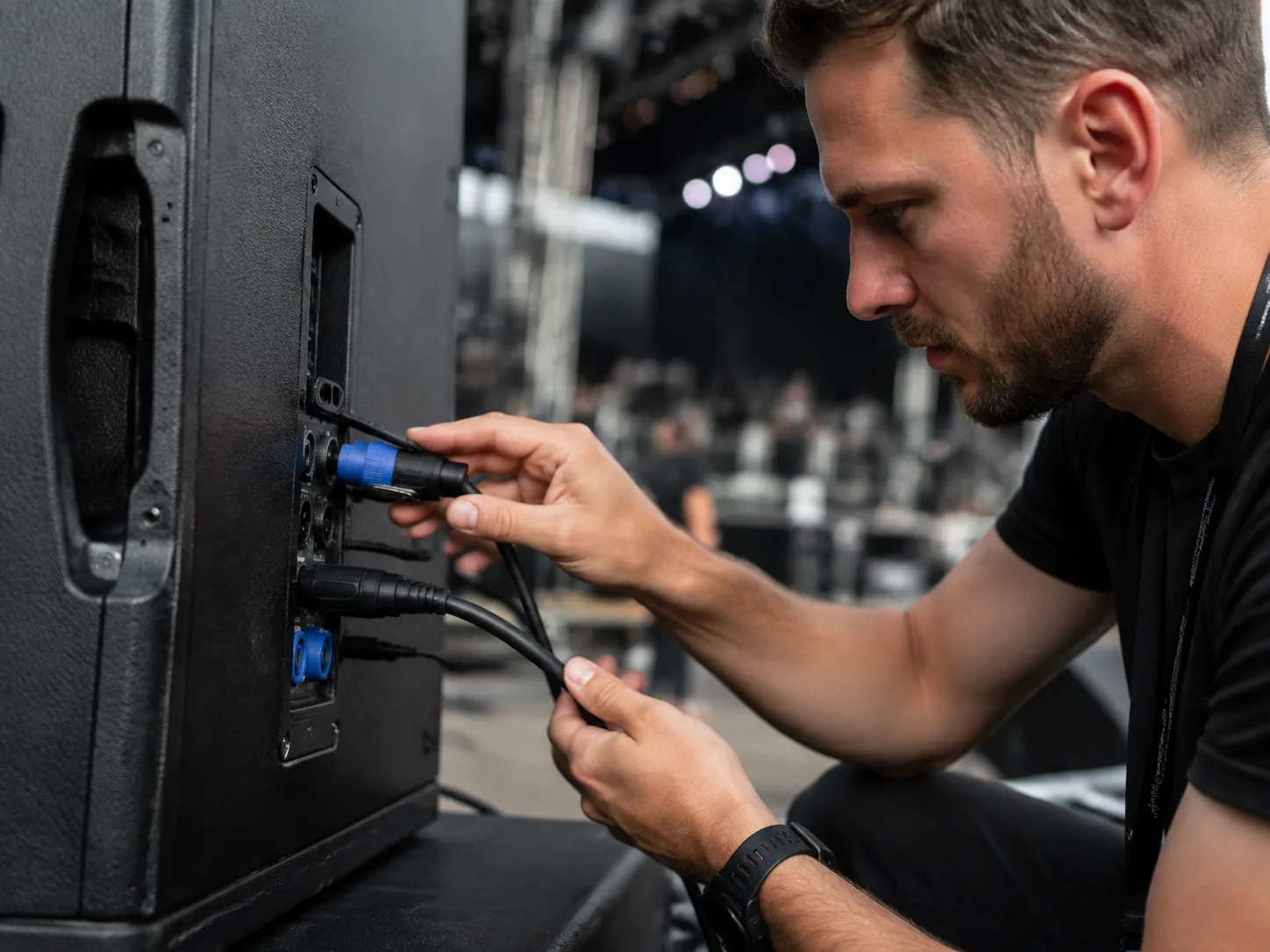
This is where a locking speaker connector has a real user-experience advantage. The user inserts, turns, and feels the lock. That physical confirmation matters when the sound system is being set up in a hurry. It also reduces one of the most common field problems: a loose or partly seated speaker cable that creates intermittent sound, crackle, channel loss, or a complete no-audio complaint.
Customers often describe the benefit in plain language. They want a cable that stays put. They want less guessing during setup. They want to know the left and right speaker lines are actually connected. They want the equipment to feel professional even when the system is being used by non-specialists.
Passive speakers are still part of the market
Powered speakers are popular because they simplify amplifier selection and reduce rack size. But passive speaker systems have not disappeared. They remain common in installed sound, rental inventory, rehearsal rooms, performance spaces, classrooms, stage monitors, distributed audio, and systems where amplifiers are kept in a protected rack.
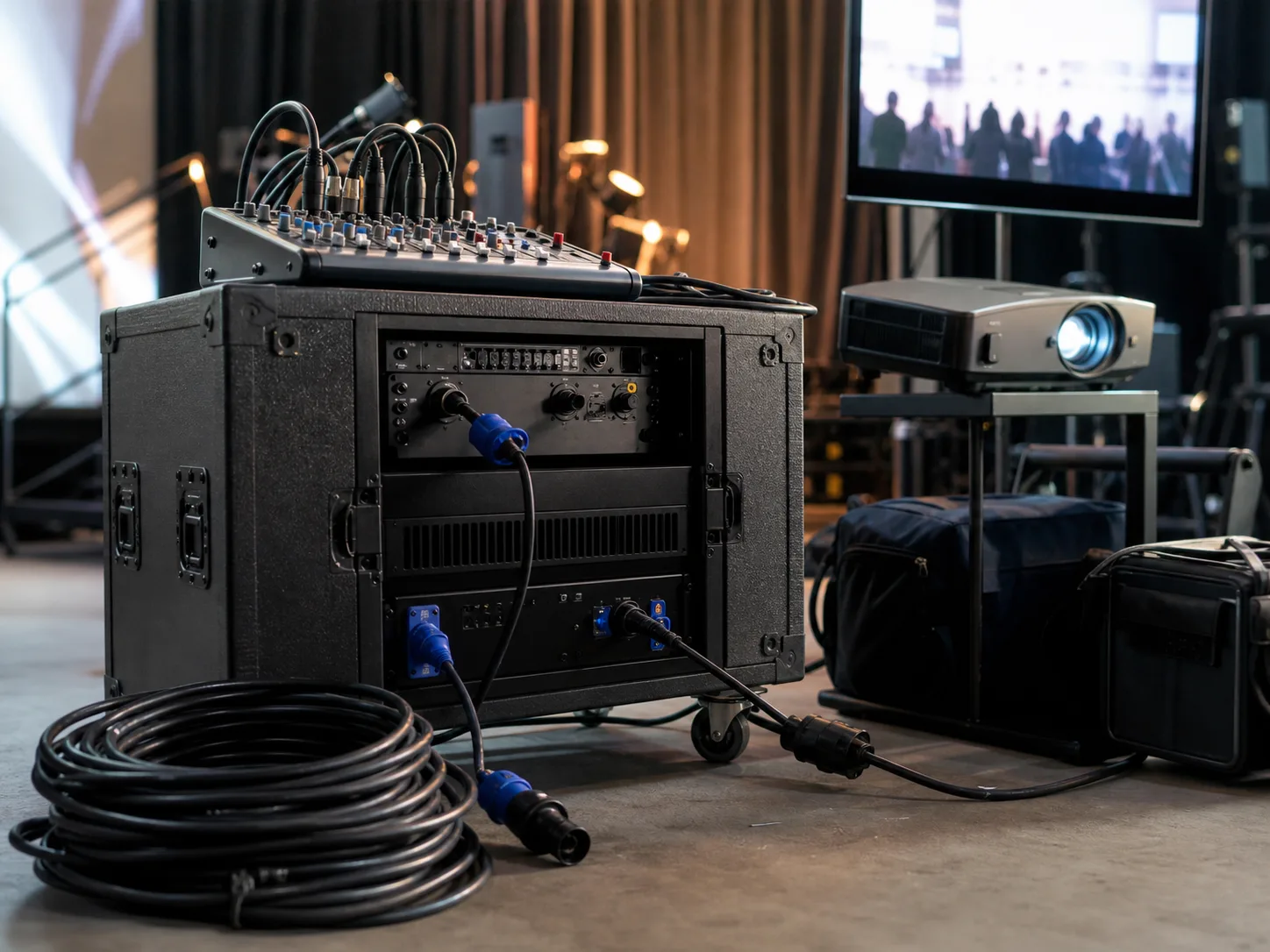
Passive systems make the speaker connector especially visible. The amplifier output, speaker cable, and cabinet input all have to match the system design. If the connector is weak, loose, poorly labeled, or hard to service, the whole speaker line becomes harder to trust. For small venues and rental companies, that can turn into lost time during every setup.
The choice is not only about the connector name. Buyers need to look at pole count, current handling, cable size, terminal design, panel mounting, strain relief, and how the connector will be used in the actual system. A 2-pole connection may be enough for many simple speaker lines. A 4-pole connector can support bi-amp wiring or more flexible cable schemes when the equipment is designed for it. The correct choice depends on the amplifier, cabinet, and wiring plan.
Schools, churches, and venues need simple troubleshooting
One reason speaker connectors deserve more attention is that many systems are no longer operated only by professional audio engineers. A teacher may set up a gym PA. A church volunteer may connect stage monitors. A hotel technician may move speakers from one ballroom to another. A small venue may have different staff on different nights.
When something fails, these users need obvious physical checks. Is the cable locked? Is it plugged into the correct output? Is the speaker side secure? Can the cable be swapped quickly? A clear locking speaker connector makes troubleshooting easier because the connection state is visible and tactile.
This does not replace good labeling, correct amplifier settings, or safe wiring. But it reduces confusion. In real-world audio work, reducing confusion is valuable. Many problems happen because people are tired, the room is dark, the schedule is tight, or several cables look similar. A connector that is easy to confirm helps the system recover faster.
Rental equipment changes the durability question
Rental and event equipment lives a harder life than equipment that sits in one room. Cables are coiled and uncoiled many times. Connectors may be dragged across floors or packed quickly into cases. Speaker cabinets may be stacked, loaded, and unloaded in different weather. Even when users are careful, the number of handling cycles is much higher.
For rental buyers, connector durability is part of operating cost. A cheaper connector can become expensive if it creates service calls, replacement labor, event delays, or customer complaints. The important questions are practical: does the latch still feel positive after repeated use, does the cable connector support proper strain relief, does the panel socket stay firm, and can the part be replaced without rebuilding the cabinet?
This is why speaker connector selection should be discussed with the enclosure, cable, and service plan. A good connector mounted poorly can still fail. A strong cable with poor strain relief can still damage the termination. A rugged cabinet with a weak input plate can still feel unreliable to the customer.
Connector layout affects the user experience
The rear panel of a speaker or amplifier is often crowded. It may include speaker outputs, signal inputs, link outputs, power connections, switches, vents, labels, and mounting hardware. If the speaker connector is too close to another connector or hard to reach, the user notices every time they set up the system.
For speaker cabinets, the socket position should allow the cable to exit naturally without sharp bending or pressure against the wall, stand, or case. For amplifier panels, the output connectors should be easy to identify by channel and should leave enough room for cable connectors to lock and unlock. Small layout decisions can save time in the field.
Buyers should also think about labeling. A connector can be mechanically excellent but still cause mistakes if the panel is unclear. Channel numbers, impedance notes, wiring mode, and input/output markings should be readable after the equipment is installed or placed on stage.
What buyers should check before ordering
Before choosing a speaker connector, buyers should confirm the system type. Is it for a passive speaker cabinet, amplifier output, stage box, wall plate, test fixture, or cable assembly? Each use has different mechanical and electrical requirements.
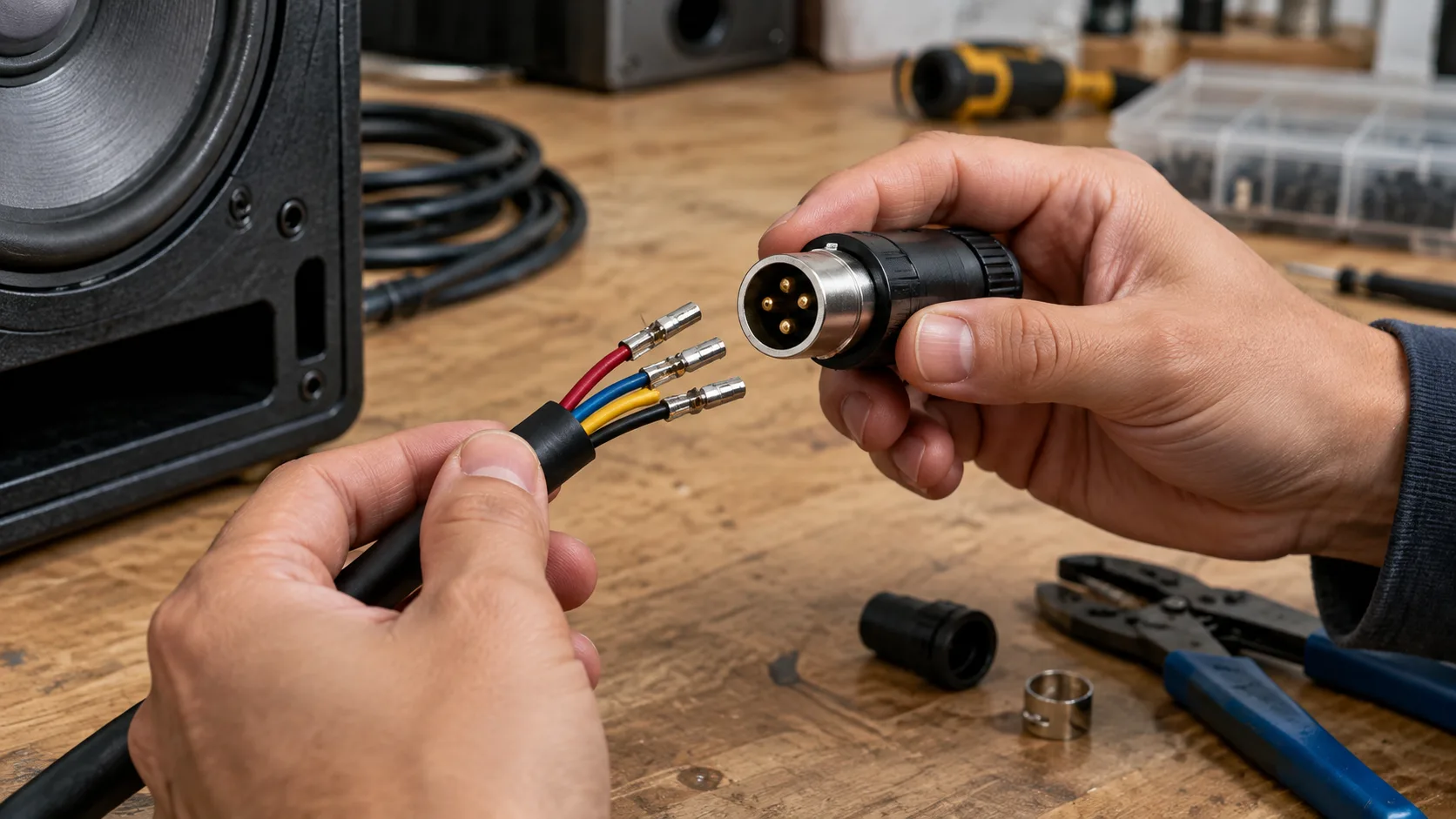
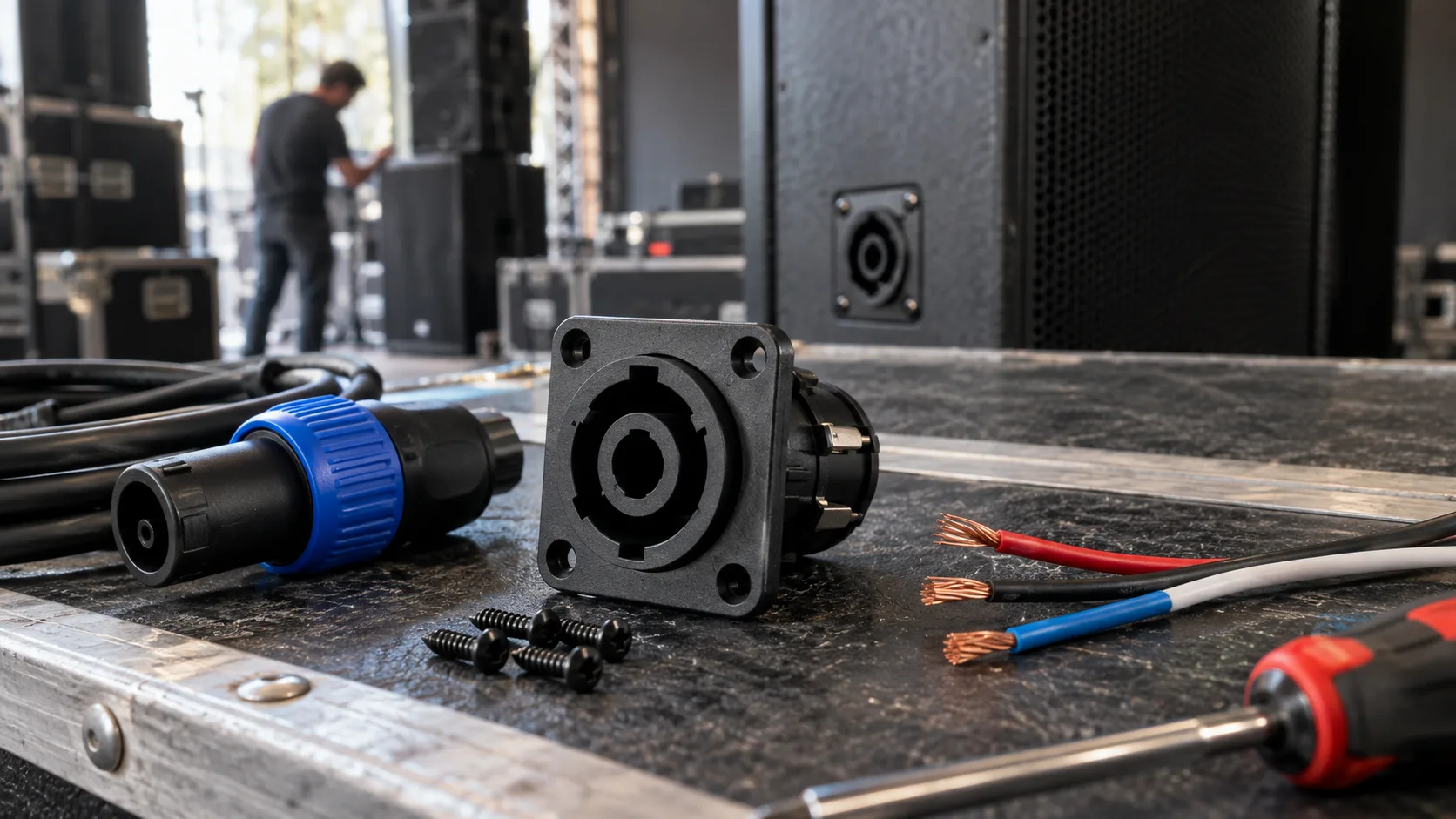
The next step is to confirm current requirement, pole count, cable diameter, termination style, panel cutout, mounting screws, rear clearance, and expected handling environment. For cable connectors, strain relief and boot design matter. For panel sockets, mounting strength and alignment matter. For both, mating feel and lock reliability matter.
It also helps to match the connector family across related products. If an OEM builds speakers, amplifier panels, and cables, using compatible connector styles can simplify drawings, purchasing, service parts, and customer support. For distributors, a focused connector range also makes it easier to recommend the right part quickly.
Why this topic can bring useful Google traffic
Many customers search for speaker connectors because they are trying to solve a real setup or sourcing problem. They may search for SpeakON connector, speaker cable connector, 4 pole speaker connector, panel mount speaker socket, passive speaker connector, or stage speaker cable plug. These searches usually come from people close to a project: repairing a speaker, building a cable, designing an amplifier panel, or comparing parts for OEM production.
A useful article should meet that buyer before the quotation stage. It should explain why the connector matters, where it is used, and what details affect reliability. That kind of content attracts practical visitors instead of only casual readers. It also helps product pages rank more naturally because the blog gives search engines a clearer context for the product category.
Outlook for 2026
Live sound systems are becoming more flexible, more portable, and more widely used by non-specialists. That makes physical connection quality more important, not less. A good speaker connector will not make a poor sound system good, but a weak connector can make a good system feel unreliable.
For OEMs, rental buyers, installers, and cable assemblers, the practical move is to choose the speaker connector early in the product or system design. Confirm the electrical rating, pole count, cable fit, panel layout, locking feel, labeling, and service plan before production. The connector is small, but it is touched often. That makes it part of the customer's memory of the product.
CENYU's SpeakON Connector range includes cable plugs and panel mount speaker sockets for professional audio systems, passive speaker cabinets, amplifiers, stage equipment, rental AV, and OEM speaker products that need secure locking speaker connections.